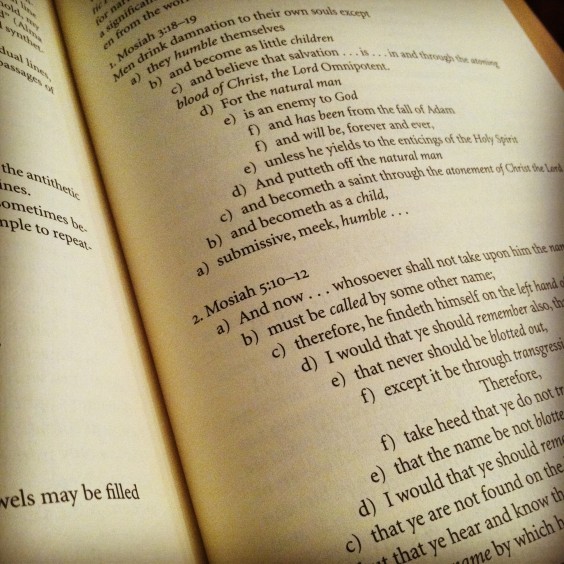
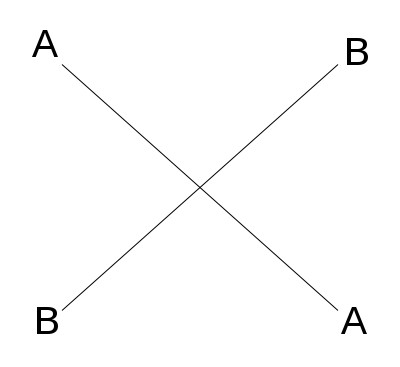
Chiasmus is one of the most frequently cited evidences for the authenticity of the Book of Mormon. This article provides an introduction to chiasmus, explaining what it is and why Mormons think it is evidence for the Book of Mormon, giving examples from the Bible, and discussing whether the Book of Mormon contains clear instances of chiasmus.
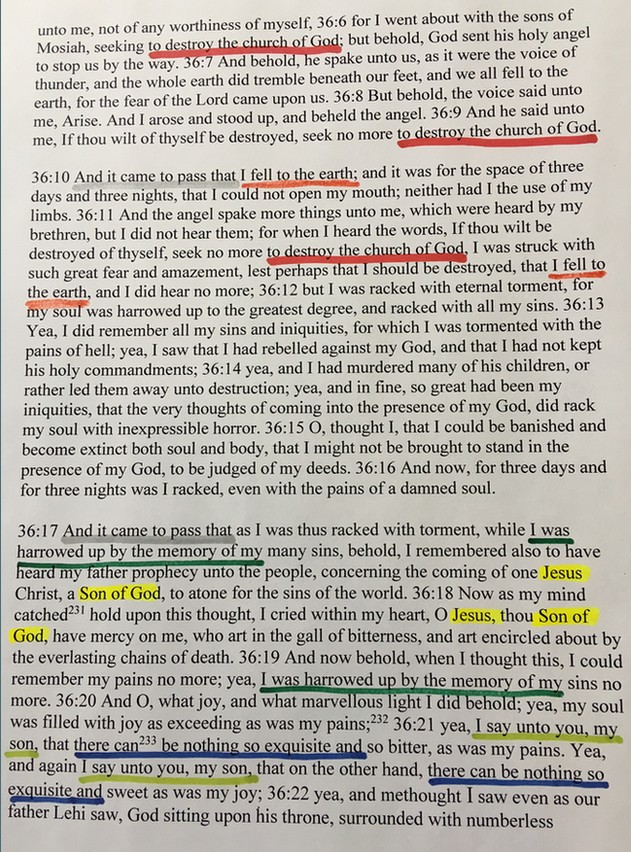
Mormons commonly cite Alma 36 as the supreme example of a long, complex chiasmus in the Book of Mormon. The first article here is a short, relatively non-technical response to this claim. The second article is a long, technical response with full documentation.
Some scholars have claimed not only that 3 Nephi 17:5-10 is a chiasmus, but that it contains one or two smaller chiasmus structures within the larger one. This article explains why there is no chiasmus in the passage at all.
The third chapter of the 1907 book The Aquarian Gospel of Jesus the Christ, a modern apocryphal gospel, looks like a lengthy chiasmus. It has weaknesses or flaws as a chiasmus, but the alleged examples of chiasmus in the Book of Mormon are far worse.